11947 stories
·
23 followers

Netflix quietly drops support for casting to most TVs

1 Share

Have you been trying to cast Stranger Things from your phone, only to find that your TV isn’t cooperating? It’s not the TV—Netflix is to blame for this one, and it’s intentional. The streaming app has recently updated its support for Google Cast to disable the feature in most situations. You’ll need to pay for one of the company’s more expensive plans, and even then, Netflix will only cast to older TVs and streaming dongles.

The Google Cast system began appearing in apps shortly after the original Chromecast launched in 2013. Since then, Netflix users have been able to start video streams on TVs and streaming boxes from the mobile app. That was vital for streaming targets without their own remote or on-screen interface, but times change.

Today, Google has moved beyond the remote-free Chromecast experience, and most TVs have their own standalone Netflix apps. Netflix itself is also allergic to anything that would allow people to share passwords or watch in a new place. Over the last couple of weeks, Netflix updated its app to remove most casting options, mirroring a change in 2019 to kill Apple AirPlay.

The company’s support site (spotted by Android Authority) now clarifies that casting is only supported in a narrow set of circumstances. First, you need to be paying for one of the ad-free service tiers, which start at $18 per month. Those on the $8 ad-supported plan won’t have casting support.

Even then, Casting only appears for devices without a remote, like the earlier generations of Google Chromecasts, as well as some older TVs with Cast built in. For example, anyone still rocking Google’s 3rd Gen Chromecast from 2018 can cast video in Netflix, but those with the 2020 Chromecast dongle (which has a remote and a full Android OS) will have to use the TV app. Essentially, anything running Android/Google TV or a smart TV with a full Netflix app will force you to log in before you can watch anything.

Streaming lockdown

Frequent travelers have long appreciated the prevalence of Google Cast support. You can drop into an Airbnb and begin streaming content to a big screen from your phone without typing your credentials into a TV you don’t own. Not only is logging into TVs often logistically annoying, but you must also remember to log out again later, and Netflix likes to hide that option.

Netflix help The Netflix help page is not very helpful. Credit: Netflix

Netflix has every reason to want people to log into its TV apps. After years of cheekily promoting password sharing, the company now takes a hardline stance against such things. By requiring people to log into more TVs, users are more likely to hit their screen limits. Netflix will happily sell you a more expensive plan that supports streaming to this new TV, though.

Netflix is also building a very particular kind of TV experience that pushes people to watch more content with a never-ending reel of previews and trailers. Engagement is now one of the primary metrics Netflix reports to investors. You can’t do that when people are only watching a single item at a time via casting sessions.

There are definitely Netflix subscribers up in arms about this change. Many claim to be frequent travelers who don’t want to log into new TVs in every Airbnb or hotel. However, the chorus of discontent is not as loud as it might have been in the past. Fewer people rely on casting support now that Google has retired the Chromecast brand to focus on more powerful streaming devices. At the same time, TV makers would be crazy to sell a screen without a certified Netflix app in 2025.

So Netflix may have a good reason to think it can get away with killing casting. However, trying to sneak this one past everyone without so much as an announcement is pretty hostile to its customers.

Read full article

Comments


Read the whole story
freeAgent
7 minutes ago
reply
Los Angeles, CA
Share this story
Delete

MKBHD’s wallpaper app Panels is shutting down

1 Share
From the time Brownlee launched Panels in September 2024, the app struggled to find an audience of its own. "We knew it was niche … and ultimately, we weren't able to turn it into the vision I had," Marques Brownlee said.
Read the whole story
freeAgent
13 minutes ago
reply
Los Angeles, CA
Share this story
Delete

Zillow drops climate risk scores after agents complained of lost sales

1 Comment
The move is a loss for homebuyers, who through Zillow had ready access to a property's climate risk scores from First Street.
Read the whole story
freeAgent
20 minutes ago
reply
If you're using Zillow for free, you're not their customer.
Los Angeles, CA
Share this story
Delete

The missile meant to strike fear in Russia’s enemies fails once again

1 Comment

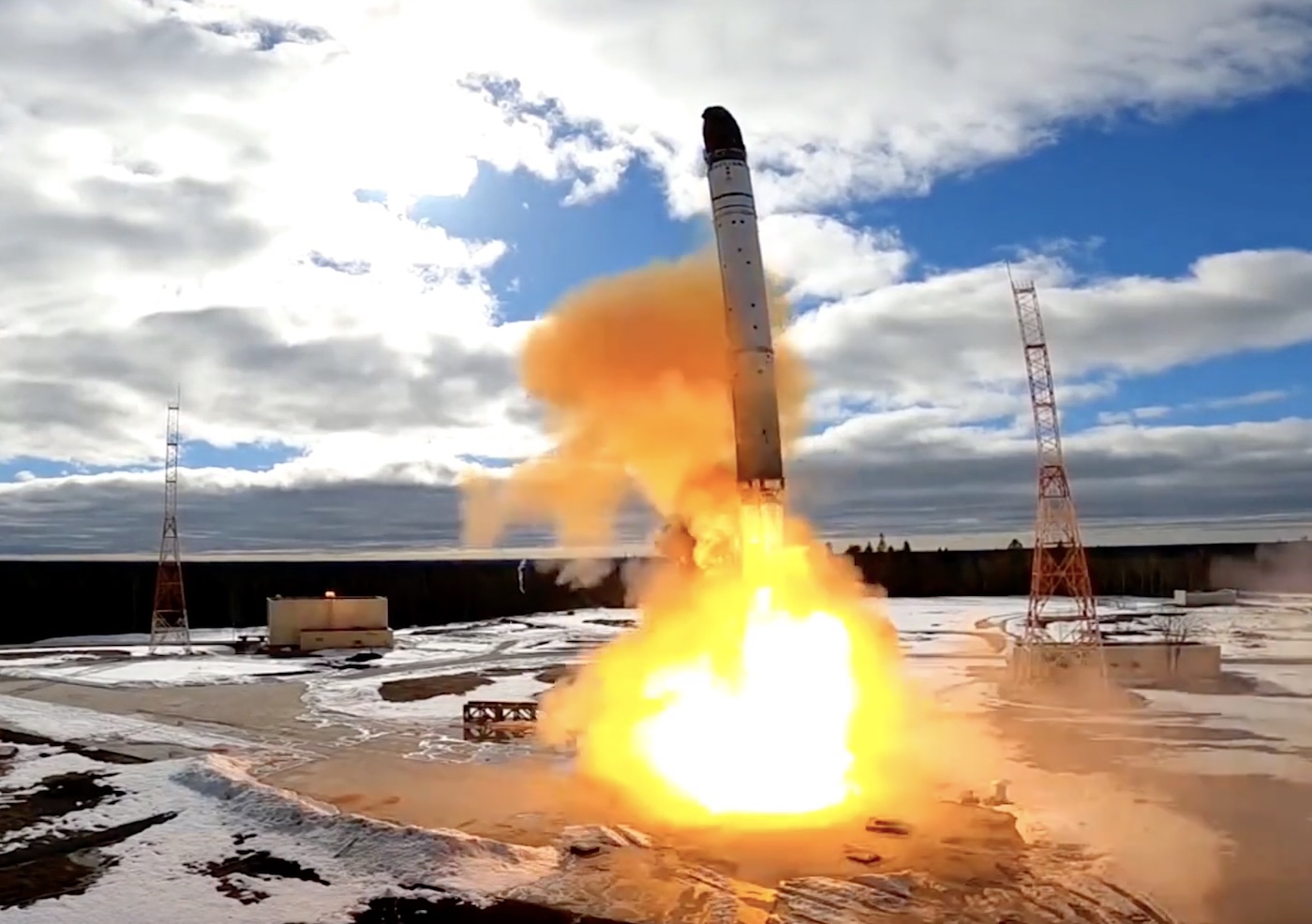
A Russian intercontinental ballistic missile (ICBM) fired from an underground silo on the country’s southern steppe Friday on a scheduled test to deliver a dummy warhead to a remote impact zone nearly 4,000 miles away. The missile didn’t even make it 4,000 feet.

Russia’s military has been silent on the accident, but the missile’s crash was seen and heard for miles around the Dombarovsky air base in Orenburg Oblast near the Russian-Kazakh border.

A video posted by the Russian blog site MilitaryRussia.ru on Telegram and widely shared on other social media platforms showed the missile veering off course immediately after launch before cartwheeling upside down, losing power, and then crashing a short distance from the launch site. The missile ejected a component before it hit the ground, perhaps as part of a payload salvage sequence, according to Pavel Podvig, a senior researcher at the United Nations Institute for Disarmament Research in Geneva.

The crash was accompanied by a fireball and a noxious reddish-brown cloud, the telltale sign of a toxic mix of hydrazine and nitrogen tetroxide used to fuel Russia’s most powerful ICBMs. Satellite images taken since Friday show a crater and burn scar near the missile silo.

Analysts say the circumstances of the launch suggest it was likely a test of Russia’s RS-28 Sarmat missile, a weapon designed to reach targets more than 11,000 miles (18,000 kilometers) away, making it the world’s longest-range missile.

The Sarmat missile in better times at the start of the program’s only successful full-scale test flight in 2022. Credit: Russian Ministry of Defense

An unusable weapon

The Sarmat missile is Russia’s next-generation heavy-duty ICBM, capable of carrying a payload of up to 10 large nuclear warheads, a combination of warheads and countermeasures, or hypersonic boost-glide vehicles, according to the Center for Strategic and International Studies. Simply put, the Sarmat is a doomsday weapon designed for use in an all-out nuclear war between Russia and the United States.

Therefore, it’s no wonder Russian officials like to talk up Sarmat’s capabilities. Russian President Vladimir Putin has called Sarmat a “truly unique weapon” that will “provide food for thought for those who, in the heat of frenzied aggressive rhetoric, try to threaten our country.” Dmitry Rogozin, then the head of Russia’s space agency, called the Sarmat missile a “superweapon” after its first test flight in 2022.

So far, what’s unique about the Sarmat missile is its propensity for failure. The missile’s first full-scale test flight in 2022 apparently went well, but the program has suffered a string of consecutive failures since then, most notably a catastrophic explosion last year that destroyed the Sarmat missile’s underground silo in northern Russia.

The Sarmat is supposed to replace Russia’s aging R-36M2 strategic ICBM fleet, which was built in Ukraine. The RS-28, sometimes called the Satan II, is a “product solely of Russian industry cooperation,” according to Russia’s Ministry of Defense.

The video of the missile failure last week lacks the resolution to confirm whether it was a Sarmat missile or the older-model R-36M2, analysts agree it was most likely a Sarmat. The missile silo used for Friday’s test was recently renovated, perhaps to convert it to support Sarmat tests after the destruction of the new missile’s northern launch site last year.

“Work there began in Spring 2025, after the ice thawed,” wrote Etienne Marcuz, an analyst on strategic armaments at the Foundation for Strategic Research, a French think tank. The “urgent renovation” of the missile silo at Dombarovsky lends support for the hypothesis that last week’s accident involved the Sarmat, and not the R-36M2, which was last tested more than 10 years ago, Marcuz wrote on X.

“If this is indeed another Sarmat failure, it would be highly detrimental to the medium-term future of Russian deterrence,” Marcuz continued. “The aging R-36M2 missiles, which carry a significant portion of Russia’s strategic warheads, are seeing their replacement pushed even further into the future, while their maintenance—previously handled by Ukraine until 2014—remains highly uncertain.”

In this pool photograph distributed by the Russian state media agency Sputnik, Russia’s President Vladimir Putin chairs a Security Council meeting at the Kremlin in Moscow on November 5, 2025. Credit: Gavriil Grigorov/Pool/AFP via Getty Images

Podvig, the UN researcher who also runs the Russian Nuclear Forces blog site, agrees with Marcuz’s conclusions. With the R-36M2 missile soon to retire, “it is extremely unlikely that the Rocket Forces would want to test launch them,” Podvig wrote on his website. “This leaves Sarmat.”

The failure adds fresh uncertainty to the readiness of Russia’s nuclear arsenal. If this were actually a test of one of Russia’s older ICBMs, the result would raise questions about hardware decay and obsolescence. In the more likely case of a Sarmat test flight, it would be the latest in a series of problems that have delayed its entry into service since 2018.

While Sarmat has floundered, Russia’s military resources have been devoted to fighting the war against Ukraine, a conflict burning through Russian airplanes, artillery, drones, and troops. In his rhetoric, Putin has invoked his strategic arsenal to warn against increasing US or European involvement in the war. In reality, Russia’s modernization of its nuclear forces has stalled while the Kremlin replenishes assets core to the war in Ukraine.

Russia has an inventory of lighter ICBMs capable of carrying single warheads or a handful of MIRVs—Multiple Independently-targetable Reentry Vehicles—each with its own nuclear weapons. When it works, the Sarmat can heave many more warheads to far-flung targets in a single launch.

Russia has scheduled a test of its Yars missile, one of the military’s smaller ICBMs, for next week, according to airspace warning notices issued Monday advising pilots to steer clear of the rocket’s flight path. Like the United States, Russia routinely tests its missile arsenal to ensure its nuclear forces are ready for war.

A few days before last week’s ICBM test, the US Air Force sent at least one RC-135S Cobra Ball surveillance plane to Alaska, a three-hour flight from Russia’s missile impact range in Siberia. The aircraft is outfitted with optical and electronic sensors to monitor ballistic missile tests, collecting data “critical to arms treaty compliance verification and development of US strategic defense and theater missile defense concepts,” the Air Force says in a fact sheet.

In a speech last month, Putin declared the Sarmat missile would undergo “combat trials” before the end of this year, before its deployment on “combat duty” next year. If Friday’s launch was a Sarmat trial run, it is clear Russian leaders can’t rely on it for combat duty.

Even before last week’s accident, some analysts raised the possibility of Russia canceling the Sarmat program and relying on its smaller ICBMs. Unlike Sarmat, many of Russia’s other land- and sea-based ballistic missiles have the advantage of using mobile launchers.

One Russian researcher based in Moscow, Dmitry Stefanovich, suggested the same in a social media post Saturday: “Sarmat deserves to be canceled.”

Read full article

Comments


Read the whole story
freeAgent
21 minutes ago
reply
Finally, some good news.
Los Angeles, CA
Share this story
Delete

Flock Uses Overseas Gig Workers to Build its Surveillance AI

1 Comment

This article was produced with support from WIRED.

Flock, the automatic license plate reader (ALPR) and AI-powered camera company, uses overseas workers from Upwork to train its machine learning algorithms, with training material telling workers how to review and categorize footage including images people and vehicles in the U.S., according to material reviewed by 404 Media that was accidentally exposed by the company.

The findings bring up questions about who exactly has access to footage collected by Flock surveillance cameras and where people reviewing the footage may be based. Flock has become a pervasive technology in the U.S., with its cameras present in thousands of communities that cops use everyday to investigate things like car jackings. Local police have also performed numerous lookups for ICE in the system. 

Companies that use AI or machine learning regularly turn to overseas workers to train their algorithms, often because the labor is cheaper than hiring domestically. But the nature of Flock’s business—creating a surveillance system that constantly monitors U.S. residents’ movements—means that footage might be more sensitive than other AI training jobs.

Flock’s cameras continuously scan the license plate, color, brand, and model of all vehicles that drive by. Law enforcement are then able to search cameras nationwide to see where else a vehicle has driven. Authorities typically dig through this data without a warrant, leading the American Civil Liberties Union (ACLU) and Electronic Frontier Foundation (EFF) to recently sue a city blanketed in nearly 500 Flock cameras.

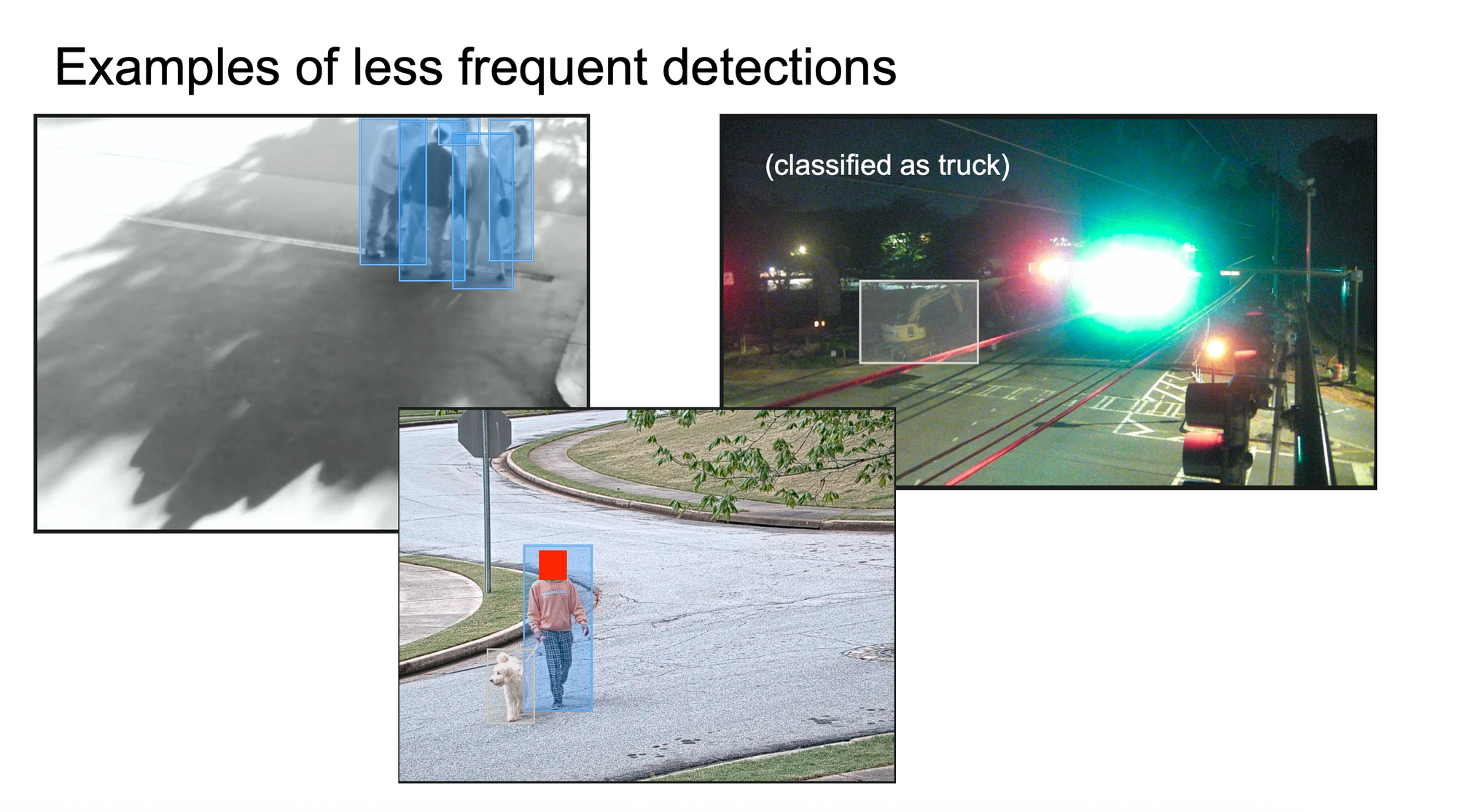
Broadly, Flock uses AI or machine learning to automatically detect license plates, vehicles, and people, including what clothes they are wearing, from camera footage. A Flock patent also mentions cameras detecting “race.” 

Multiple tipsters pointed 404 Media to an exposed online panel which showed various metrics associated with Flock’s AI training.  

It included figures on “annotations completed” and “annotator tasks remaining in queue,” with annotations being the notes workers add to reviewed footage to help train AI algorithms. Tasks include categorizing vehicle makes, colors, and types, transcribing license plates, and “audio tasks.” Flock recently started advertising a feature that will detect “screaming.” The panel showed workers sometimes completed thousands upon thousands of annotations over two day periods. 

The exposed panel included a list of people tasked with annotating Flock’s footage. Taking those names, 404 Media found some were located in the Philippines, according to their LinkedIn and other online profiles.

Many of these people were employed through Upwork, according to the exposed material. Upwork is a gig and freelance work platform where companies can hire designers, writers, or pay for “AI services,” according to Upwork’s website. 

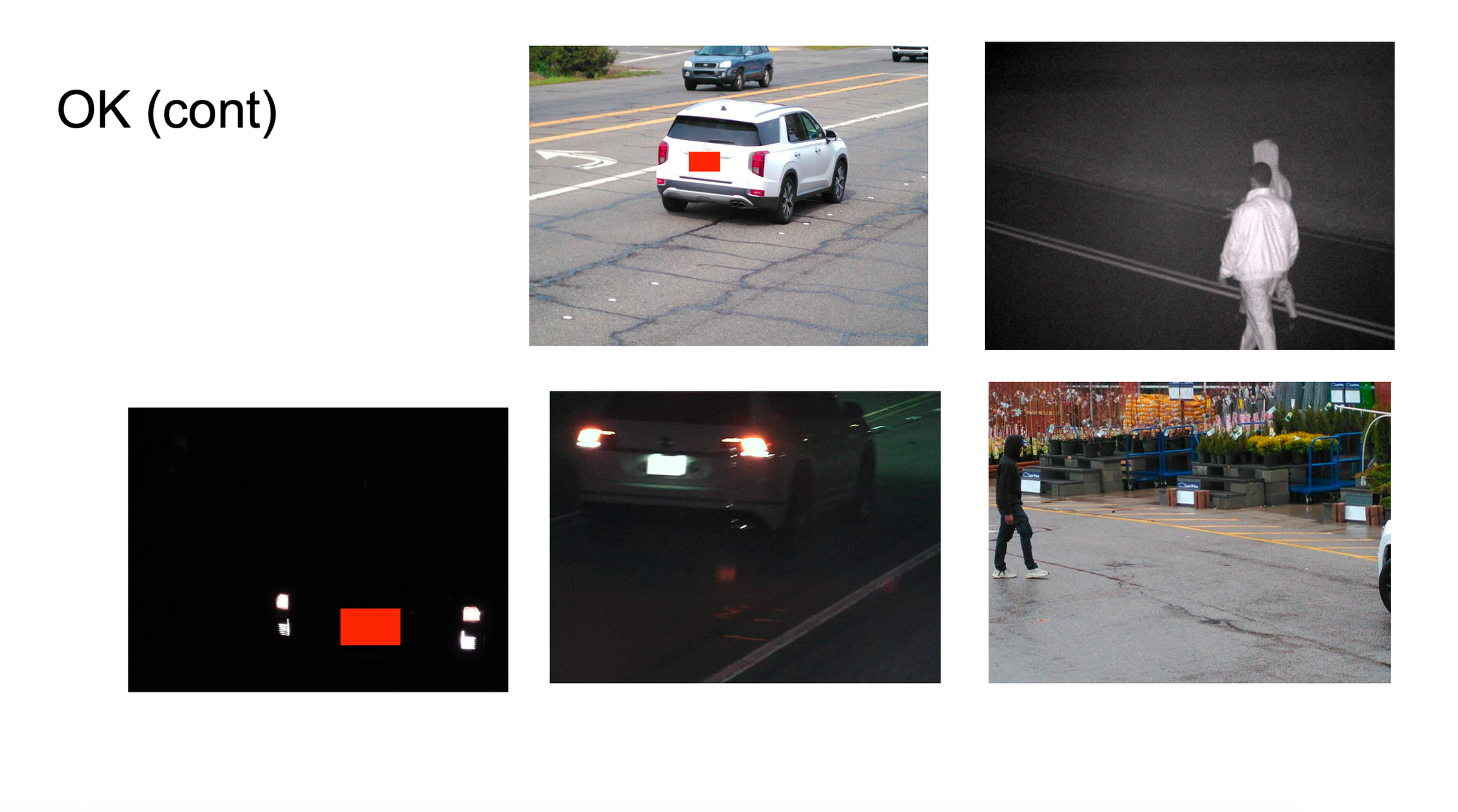
The tipsters also pointed to several publicly available Flock presentations which explained in more detail how workers were to categorize the footage. It is not clear what specific camera footage Flock’s AI workers are reviewing. But screenshots included in the worker guides show numerous images from vehicles with U.S. plates, including in New York, Michigan, Florida, New Jersey, and California. Other images include road signs clearly showing the footage is taken from inside the U.S., and one image contains an advertisement for a specific law firm in Atlanta.

One slide about audio told workers to “listen to the audio all the way through,” then select from a dropdown menu including “car wreck,” “gunshot," and “reckless driving.” Another slide says tire screeching might be associated with someone “doing donuts,” and another says that because it can be hard to distinguish between an adult and a child screaming, workers should use a second dropdown menu explaining their confidence in what they heard, with options like “certain” and “uncertain.”

Another slide deck explains that workers should not label people inside cars, but should label those riding motorcycles or walking.

After 404 Media contacted Flock for comment, the exposed panel became no longer available. Flock then declined to comment.


Read the whole story
freeAgent
25 minutes ago
reply
Outsourced intelligence.
Los Angeles, CA
Share this story
Delete

Hegseth's Alleged Order To 'Kill Everybody' Complicates Trump's Defense of His Murderous Anti-Drug Campaign

1 Comment
Defense Secretary Pete Hegseth |  Aaron Schwartz/Sipa USA/Newscom

Eight days after the September 2 operation that inaugurated President Donald Trump's lethal military campaign against suspected drug boats, The Intercept reported that people who survived the initial missile strike were "killed shortly after in a follow-up attack." On Friday, The Washington Post confirmed that account, saying the commander overseeing the operation, based on an oral directive from Defense Secretary Pete Hegseth to "kill everybody," ordered a second strike on "two survivors" who "were clinging to the smoldering wreck."

If that report is accurate, Reason's Christian Britschgi notes, "the second strike on helpless survivors would add a degree of barbarism to the administration's anti-drug campaign." It also would further complicate the arguments that Trump has deployed to justify his unprecedented policy of summarily executing suspected drug smugglers, which so far has involved 21 attacks that killed 83 people in the Caribbean and the eastern Pacific. Even if you accept Trump's dubious claim that the United States is engaged in a "non-international armed conflict" with "narcoterrorists," which supposedly means U.S. forces can legally attack vessels believed to be carrying illegal drugs, deliberately killing survivors would be contrary to the law of war.

"Both the giving and the execution of these orders" would "constitute war crimes, murder, or both," the Former JAGs Working Group, which consists of lawyers who previously served in the military, said on Saturday. "If the U.S. military operation to interdict and destroy suspected narcotrafficking vessels is a 'non-international armed conflict' as the Trump Administration suggests, orders to 'kill everybody,' which can reasonably be regarded as an order to give 'no quarter,' and to 'double-tap' a target in order to kill survivors, are clearly illegal under international law. In short, they are war crimes."

The former military lawyers add that the situation is even graver "if the U.S. military operation is not an armed conflict of any kind." In that case, they say, "these orders to kill helpless civilians clinging to the wreckage of a vessel our military destroyed would
subject everyone from [the secretary of defense] down to the individual who pulled the trigger to prosecution under U.S. law for murder."

Rep. Michael R. Turner (R–Ohio), a former chairman of the House Intelligence Committee, likewise recognized the import of the Post's article during a Face the Nation interview on Sunday. "If that occurred," he said, it would be "very serious," and "I agree" it "would be an illegal act." He noted that "there are very serious concerns in Congress about the attacks on the so-called drug boats" and about "the legal justification [that] has been provided." But he said the follow-up strike described by the Post "is completely outside of anything that has been discussed with Congress."

The Senate Armed Services Committee "is aware of recent news reports—and the Department of Defense's initial response—regarding alleged follow-on strikes on suspected narcotics vessels in the SOUTHCOM area of responsibility," Sen. Roger Wicker (R–Miss.), the committee's chairman, and Sen. Jack Reed (D–R.I.), the committee's ranking minority member, said in a statement on Friday. "The Committee has directed inquiries to the Department, and we will be conducting vigorous oversight to determine the facts related to these circumstances."

On Saturday, the House Armed Services Committee said it also would look into the incident. "We take seriously the reports of follow-on strikes on boats alleged to be ferrying narcotics in the SOUTHCOM region and are taking bipartisan action to gather a full accounting of the operation in question," said Rep. Mike Rogers (R–Ala.), the committee's chairman, and Rep. Adam Smith (D–Wash.), the committee's ranking minority member.

Based on information from four unnamed sources "with direct knowledge of the matter," the Post reports that "the elite counterterror group SEAL Team 6 led the attack," which killed a total of 11 people, under the command of Adm. Frank M. Bradley at Fort Bragg in North Carolina. Here is how the Post describes the attack: "A missile screamed off the Trinidad coast, striking the vessel and igniting a blaze from bow to stern. For minutes, commanders watched the boat burning on a live drone feed. As the smoke cleared, they got a jolt: Two survivors were clinging to the smoldering wreck." According to two of the Post's sources, Bradley "ordered a second strike to comply with Hegseth's instructions," and "the two men were blown apart in the water."

Such instructions "would in essence be an order to show no quarter, which would be a war crime," former military lawyer Todd Huntley, "who advised Special Operations forces for seven years at the height of the U.S. counterterrorism campaign," told the Post. The second strike described by the Post also contrasts with what happened after subsequent attacks on suspected drug boats.

After an October 16 attack in the Caribbean that killed two people, The New York Times notes, "two men from the boat were rescued by the U.S. military and repatriated within days to Colombia and Ecuador." And after an October 27 attack that killed 15 people in the eastern Pacific, "U.S. surveillance spotted one of the men clinging to wreckage and alerted the Mexican Navy," which "tried to find and rescue him for four days but could not."

Why didn't U.S. forces take the same approach on September 2? "In briefing materials provided to the White House," the Post says, the Joint Special Operations Command "reported that the 'double-tap,' or follow-on strike, was intended to sink the boat and remove a navigation hazard to other vessels—not to kill survivors." According to "two congressional aides," the paper reports, "a similar explanation was given to lawmakers in two closed-door briefings."

Pentagon spokesman Sean Parnell nevertheless declined to answer the Post's questions about Hegseth's instructions or the circumstances of the second strike. But Parnell suggested that any criticism of Trump's bloodthirsty anti-drug campaign was misguided. "This entire narrative is completely false," he told the Post. "Ongoing operations to dismantle narcoterrorism and to protect the Homeland from deadly drugs have been a resounding success."

Hegseth likewise dodged the legal issues raised by the Post's report. "As usual, the fake news is delivering more fabricated, inflammatory, and derogatory reporting to discredit our incredible warriors fighting to protect the homeland," he said in an X post on Friday. "As we've said from the beginning, and in every statement, these highly effective strikes are specifically intended to be 'lethal, kinetic strikes.' The declared intent is to stop lethal drugs, destroy narco-boats, and kill the narco-terrorists who are poisoning the American people. Every trafficker we kill is affiliated with a Designated Terrorist Organization."

The Pentagon has not named any of the men whose deaths Trump has ordered. But it said all 11 people killed in the September 2 attack were members of the Venezuelan gang Tren de Aragua, which is on the State Department's list of "foreign terrorist organizations" (FTOs). That designation is puzzling as applied to drug cartels, which are criminal organizations motivated by profit rather than religious or ideological groups that use violence to achieve political goals. And contrary to Hegseth's implication, an FTO designation, which authorizes the Treasury Department to block transactions involving a listed group's assets and triggers criminal penalties for providing it with "material support or resources," is not a license to kill that transforms murder into self-defense.

In addition to describing his targets as "narcoterrorists," Trump conflates drug smuggling with violent aggression, saying the cartels' activities "constitute an armed attack against the United States." But the "non-international armed conflict" he perceives has not been recognized by Congress, and it departs from the United Nations definition of that term, which requires violent confrontations between "organised Parties" that possess "organised armed forces." The violence must "meet a minimum threshold of intensity" that distinguishes it from threats such as "riots," "banditry," "unorganized and short-lived insurrections," and "terrorist activities."

The "armed conflict" that Trump describes does not meet these criteria. "This is not stretching the envelope," Geoffrey Corn, formerly the U.S. Army's senior adviser on the law of war, told The New York Times. "This is shredding it."

Trump's assertion of an "armed conflict" also seems to contradict his administration's claim that U.S. forces are not engaged in "hostilities" when they blow up suspected drug boats, meaning the operations are not covered by the War Powers Resolution. According to the Justice Department, that law's constraints do not apply in this situation because American service members face no plausible threat of casualties, which underlines the point that Trump is killing people in cold blood without moral or legal justification.

Trump and Hegseth have publicly argued that drug smugglers can be legally killed because they are "combatants" in an "armed conflict"—albeit one that somehow does not involve "hostilities." But a confidential memo from the Justice Department's Office of Legal Counsel (OLC) reportedly takes a different tack. Citing "people who have read it," The New York Times reports that the memo "is said to focus instead on the purported shipments of narcotics aboard, portraying those as the specific targets of the strikes based on the theory that their sale would generate revenue that cartels would use to finance their alleged war efforts."

According to the OLC, in other words, the boats are legitimate military targets because the drugs they carry provide financial support for the cartels' "armed attack against the United States." But that "armed attack," according to Trump, consists of supplying Americans with the prohibited intoxicants they want, a business that is simultaneously warfare and the means of financing warfare.

All of this is pretty confusing, especially as a justification for killing criminal suspects instead of intercepting and arresting them, a practice that Hegseth derides as "the kid gloves approach" and Trump complains has been "totally ineffective." But even if Trump can avoid due process and obliterate the distinction between civilians and combatants by portraying drug smuggling as an "armed attack," the military response to that purported attack is still constrained by the law of war, which frowns on killing defenseless people clinging to a boat's wreckage.

On Sunday, Trump implicitly acknowledged that point. "I wouldn't have wanted that," he told reporters. "Not a second strike." But Trump said he has "great confidence" that Hegseth did not issue the "kill everybody" order described by the Post. Trump said Hegseth told him "he did not say that, and I believe him, 100 percent."

On Monday, White House Press Secretary Karoline Leavitt reiterated that Hegseth issued no such order but added: "President Trump and Secretary Hegseth have made it clear that presidentially designated narcoterrorist groups are subject to lethal targeting in accordance with the laws of war. With respect to the strikes in question on September 2, Secretary Hegseth authorized Admiral Bradley to conduct these kinetic strikes. Admiral Bradley worked well within his authority and the law, directing the engagement to ensure the boat was destroyed and the threat to the United States of America was eliminated."

So no, Trump is not having second thoughts about the morality of killing suspected drug smugglers. "The first strike was very lethal," he said on Sunday, and "it was fine."

Was it? Huntley joins many other experts on the law of war in rejecting Hegseth's claim that "our current operations in the Caribbean are lawful under both U.S. and international law, with all actions in compliance with the law of armed conflict." Because the longstanding effort to stop illegal drugs from entering the country does not qualify as an "armed conflict," Huntley told the Post, killing suspected smugglers, whether in a boat or in the water, "amounts to murder."

The post Hegseth's Alleged Order To 'Kill Everybody' Complicates Trump's Defense of His Murderous Anti-Drug Campaign appeared first on Reason.com.

Read the whole story
freeAgent
34 minutes ago
reply
We won't tell you what actually happened, but we're proud of it. Whatever happened was totally awesome and legal and totally not a war crime, and you're a horrible person for asking.
Los Angeles, CA
Share this story
Delete
Next Page of Stories