Log in


Also in today's Critical Materials roundup: President Trump wants kei cars in America, and hybrids are here to stay.



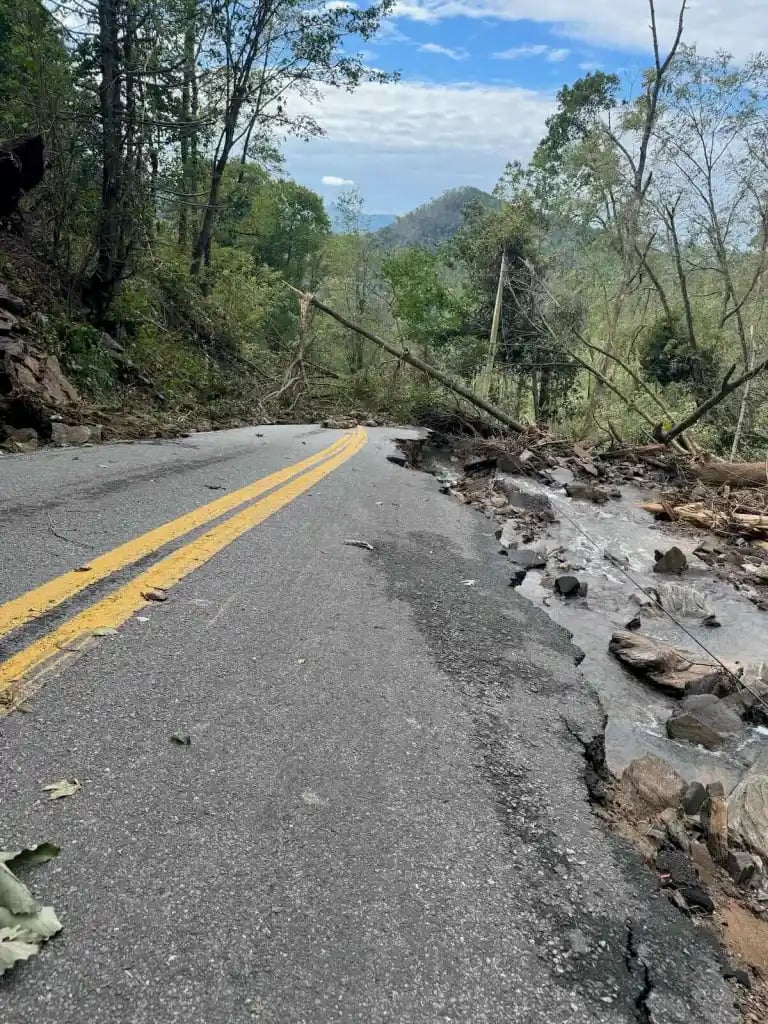
In September 2024, Hurricane Helene blew in from the Gulf of Mexico to wreak destruction in an unlikely place: the mountains of western North Carolina. Thomas Witherspoon, who has lived in that area for years, told me on Techtonic this week how rare this event was. “Normally,” he said, “we have very boring weather.”
That changed when Helene rolled in, causing power outages, road closures, and widespread flooding. Whole neighborhoods were devastated. Witherspoon, who lives on a rural road, had no vehicular access to the nearby town, no power except through his home’s solar array, and no cell phone access: the towers were all offline. Not even 911 was working.
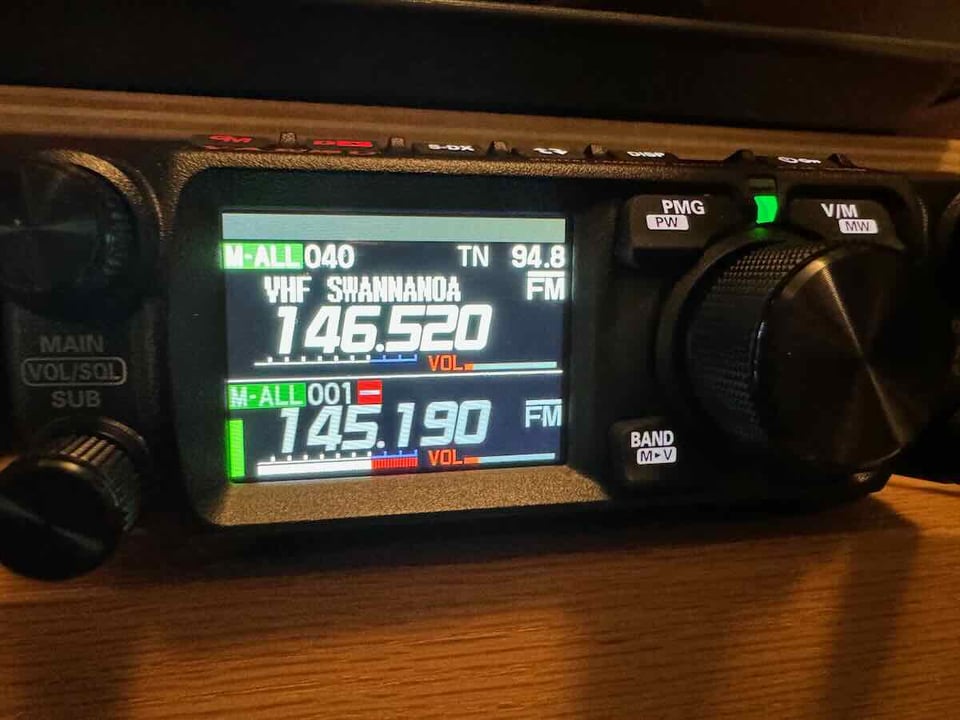
One thing that was working was his radio. Witherspoon is a licensed amateur radio operator (or “ham”) with years of experience connecting with other operators hundreds, even thousands of miles away via portable, low-power radios. (For any operators reading this: Witherspoon’s ham radio call sign is K4SWL – though he’s well known enough in the community that you might know that already!)
Witherspoon’s radio – along with the solar-power system and battery he happened to have installed not long before Helene – gave him the crucial ability to communicate with relief coordinators in undamaged parts of the state. (See the news video about the Mt. Mitchell repeater.)
At one point, Witherspoon used the radio to ask for a helicopter drop of supplies to his road. As he told me, his request was immediately approved. “He said, ‘Thomas, we’ll take care of that for you tomorrow.’ And that was it.”
That’s why Witherspoon calls amateur radio a “superpower.”
This episode of Techtonic has gotten more positive response than any recent show I can remember. Even if (or especially if) you know nothing about amateur radio, I’d recommend listening:
You can listen on the episode page on the Techtonic website.
Or if you prefer, here’s the podcast version.
There was a twist about halfway through our conversation. After talking about the starting kit that an amateur radio operator needs, and the process of getting licensed, Witherspoon mentioned that his radio was only part of how he and his family survived Helene. Something else, it turns out, was just as vital to his success.
It was community. When I suggested to Witherspoon that working together with his neighbors was the most important component of his survival post-Helene, he immediately agreed:
It was. It was. I’ve told people, don’t believe what you see in these doomsday prepper shows where in a disaster of some sort, you separate yourself from society and you get in a big bunker, you have your own supplies, and you rely only on yourself. If you do that, you’re just missing out on the efficiency and resilience that you get with community. It was everything for us.
Witherspoon described the varied skills among his neighbors. One is a mechanic, another is a trauma nurse, and others (including Witherspoon) are skilled at using chainsaws. His radio was just one of many resources. A person, or a family, acting alone would have had a much harder time.
One has to wonder what will happen to the tech oligarchs when cataclysm strikes. Let’s suppose everything goes exactly right and the billionaire is able to escape with his family to a bunker in New Zealand. What then? Holing up – literally, living in a hole – isolated from the rest of the world, with no community, and no possibility of helping, or being helped by, other people. It sounds like hell.
Community, neighbors helping neighbors, is diametrically opposed to the billionaire’s plan for isolation. Another revealing comparison has to do with technology: Witherspoon’s amateur radio vs. the billionaires’ AI-and-social-media slop platforms.
Amateur radio is old, non-flashy, reliable technology. Big Tech offers flashy, hype-driven, untested AI platforms. (Think: which is likely to be available, at all, during a disaster?)
Amateur radio is energy efficient – Witherspoon told me about communicating at “9,000 miles per watt” – while Big Tech platforms are the opposite. Read my column Don’t let the data center come to town (Oct 14, 2025).
Amateur radio is decentralized, open, on a public protocol, available to everyone and owned by no one. Big Tech maintains a chokehold on centralized, closed, extractive surveillance platforms.
Amateur radio exists to benefit people – both the operators and their communities. Big Tech exists to benefit the billionaires and the investors and executives aligned with them.
Amateur radio is designed to foster better, more transparent communication. (As Witherspoon said during the interview, in the absence of communication, rumors immediately started spreading; all of this cleared up with radio connection.) Big Tech platforms, in contrast, are designed to amplify rumor, falsehood, outrage, and distrust – all in an attempt to maximize “engagement.”
Comparing these two technologies, it’s easy to see why Witherspoon’s community was so well served by amateur radio: it’s designed to benefit people. The Silicon Valley sludge factories, on the other hand, generate profit by pulling communities apart. In both cases, the technologies are working as designed.
My point is that we can make better choices if we first get clear on who the technology is designed to serve. Communities can benefit from technology, if we choose the right platforms to use. The challenge is to learn that lesson before the next disaster strikes.
Finally, I’ve posted links to more resources around disaster prep and recovery aid on the members-only Creative Good Forum. I hope you’ll join Creative Good to support my work and get access to all resources I’ve posted.
Until next time,
-mark
Mark Hurst, founder, Creative Good ← please join as a member
Email: mark@creativegood.com
Podcast/radio show: techtonic.fm
Follow me on Bluesky or Mastodon
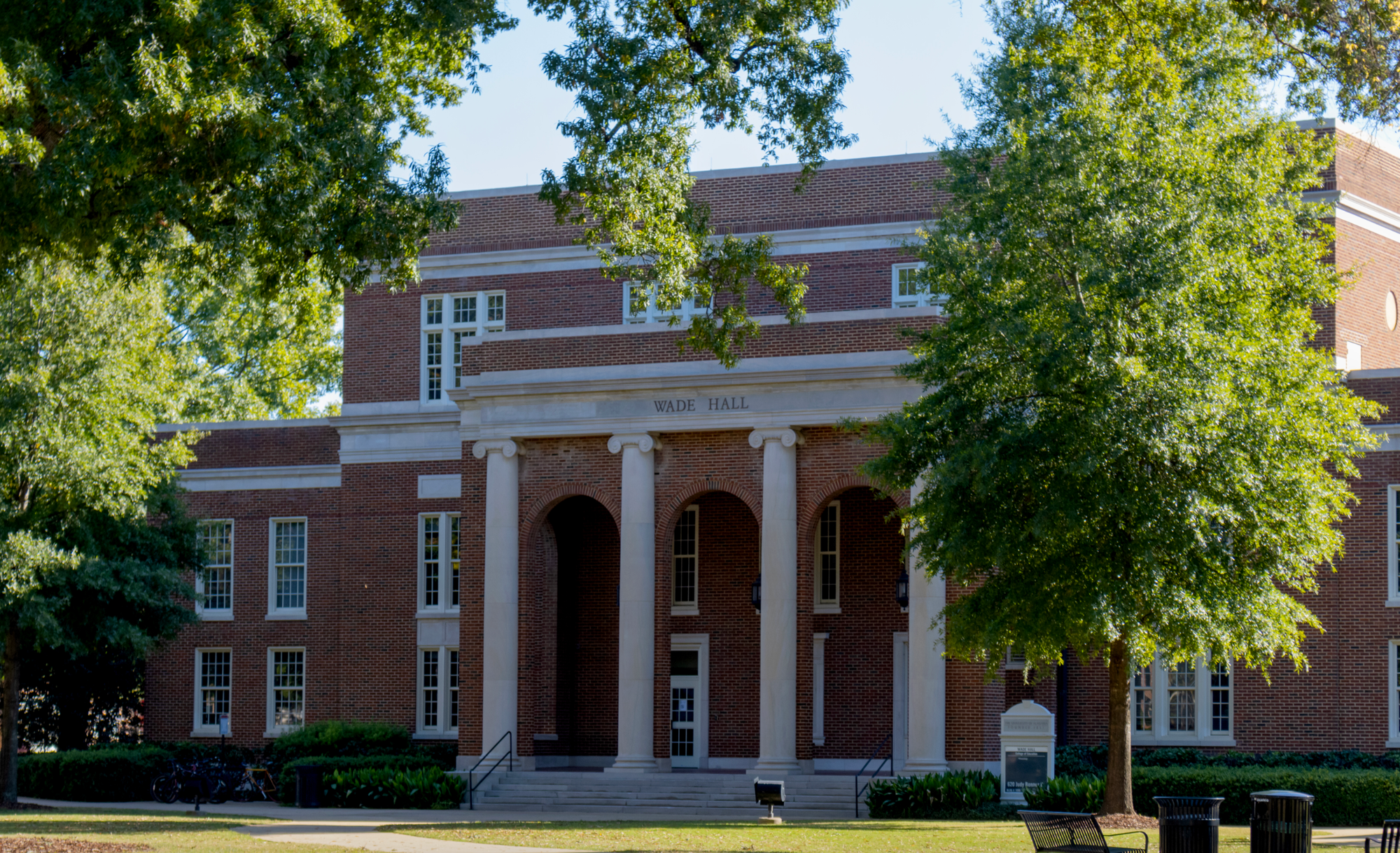
Administrators at the University of Alabama shut down two student-led publications and claimed that a memo from Attorney General Pam Bondi required them to censor journalism.
On July 29, Bondi issued “non-binding suggestions” for “federal funding recipients to comply with antidiscrimination law.” The intent was to discourage diversity, equity, and inclusion (DEI) policies, and Bondi specifically stated that “unlawful proxies” could jeopardize funding.
Bondi also insisted that universities may not direct funds and other resources to organizations “primarily because of their racial or ethnic composition rather than other legitimate factors.”
The magazines, Alice Magazine and Nineteen Fifty-Six, were suspended on December 1. Alice Magazine is a fashion and wellness magazine that primarily focuses on women. Nineteen Fifty-Six is a magazine largely focused on “Black culture, Black excellence and Black student experiences at the University of Alabama.”
As the university’s student newspaper The Crimson White reported, “Steven Hood, vice president of student life, told the staff of each magazine on Monday night that because the magazines target primarily specific groups, they are ‘unlawful proxies.’”
Alex House, a university spokesperson, claimed Bondi’s memo required the university to “ensure all members of our community feel welcome to participate in programs that receive University funding from the Office of Student Media.” (Both magazines received university funds.)
The same spokesperson maintained that the university “will never restrict [their] students’ freedom of expression,” and the they were simply responding to the “compliance landscape.” However, no one enrolled or working at the university complained about the magazines. No one sued the university to force “compliance.”
It is difficult to understand why the university took action against students several months after the memo was issued by Bondi.
Mike Hiestand, senior legal counsel for the Student Press Law Center, stated, “The Supreme Court has made clear that viewpoint discrimination is off-limits, and it’s difficult to imagine a more straightforward example than a university openly acknowledging it. By shutting down only the magazines that primarily serve women and Black students — while leaving other publications alone—it looks a lot like they are targeting a particular point of view.”
The center urged the university to immediately “restore” the magazines.
Similarly, the Foundation for Individual Rights and Expression (FIRE) sent a letter to university administrators. “No federal antidiscrimination law requires the university to silence these publications, and its choice to do so is a violation of their clearly established First Amendment rights.”
“The decisions about what to publish belong to the student editors of Alice Magazine and Nineteen Fifty-Six, and there can be no doubt that administrative action against student media in response to what they publish betrays UA’s obligation to protect free expression.”
Gabrielle Gunter, the editor-in-chief of Alice Magazine, told The Crimson White, "It is so disheartening to know that so many of us have put so much hard work into these magazines that are now being censored."
"Alice is what got me into journalism, and it breaks my heart that there will no longer be spaces like Alice and Nineteen Fifty-Six where students can learn to create beautiful, diverse magazines that honor all types of identities."
Kendal Wright, editor-in-chief of Nineteen Fifty-Six, expressed her sadness. "This publication has cultivated incredibly talented and budding Black student journalists and brought our community on campus together in such a beautiful way."
The letter from FIRE clearly outlines the unlawful nature of the University of Alabama’s viewpoint-based discrimination:
UA explicitly justified its punitive actions by pointing to the viewpoints expressed by the magazines, which the Supreme Court has called “an egregious form of content discrimination.” By suspending these magazines based on their target audiences—in other words, the magazines’ viewpoints—UA is “cast[ing] disapproval on particular viewpoints of its students[.] And, in doing so, UA “risks the suppression of free speech and creative inquiry in one of the vital centers for the Nation’s intellectual life, its college and university campuses.” Further, by leaving other student media untouched, UA has concretely demonstrated that it favors those viewpoints over those communicated by Alice Magazine and Nineteen Fifty-Six.
FIRE demanded that the university respond to their letter by December 10 and reverse this “brazen attack on the student press” by ending the suspensions against the two publications.
“It has been an exceptionally tough year for universities and for student media—at Indiana University, Central Oklahoma University and so many others—and moments like this are precisely when educational institutions should be standing up for free speech and a free press,” Hiestand further emphasized.
Back in October, The Dissenter covered the brazen censorship at Indiana University, where administrators shut down printing of the school’s student newspaper The Indiana Daily Student. (Three weeks later, administrators responded to alumni pulling funding and reinstated the print edition.)
The same month the University of Central Oklahoma also halted printing of the school’s newspaper The Vista. It had been published for 122 years, yet the university interfered with the editorial independence of the newspaper and retaliated against students’ coverage of news on campus. Ultimately, students launched a new publication The Independent View.
Columbia University student journalists were threatened with disciplinary action, including suspension, for reporting on student demonstrations in support of Palestinians and against Israel’s genocidal campaign against Gaza.
Plus, Secretary of State Marco Rubio and Homeland Security Secretary Kristi Noem have targeted noncitizen student journalists for deportation.
The student newspaper at Stanford University said this has resulted in a “dramatic decrease in the number of international students willing to speak” to reporters and a loss of international staff, who no longer wished to write articles about protests or political events on campus. (The Stanford Daily sued Rubio and Noem.)
The right of students to report is under assault, and yet as Hiestand said, “[T]oo many administrators are using the moment to silence student speech they don’t like.”
This story was reported with support from the MuckRock foundation.
As prices for streaming subscriptions continue to soar and finding movies to watch, new and old, is becoming harder as the number of streaming services continues to grow, people are turning to the unexpected last stronghold of physical media: the public library. Some libraries are now intentionally using iconic Blockbuster branding to recall the hours visitors once spent looking for something to rent on Friday and Saturday nights.
John Scalzo, audiovisual collection librarian with a public library in western New York, says that despite an observed drop-off in DVD, Blu-ray, and 4K Ultra disc circulation in 2019, interest in physical media is coming back around.
“People really seem to want physical media,” Scalzo told 404 Media.
Part of it has to do with consumer awareness: People know they’re paying more for monthly subscriptions to streaming services and getting less. The same has been true for gaming.
As the audiovisual selector with the Free Library of Philadelphia since 2024, Kris Langlais has been focused on building the library’s video game collections to meet comparable interest in demand. Now that every branch library has a prominent video game collection, Langlais says that patrons who come for the games are reportedly expressing interest in more of what the library has to offer.
“Librarians out in our branches are seeing a lot of young people who are really excited by these collections,” Langlais told 404 Media. “Folks who are coming in just for the games are picking up program flyers and coming back for something like that.”
Langlais’ collection priorities have been focused on new releases, yet they remain keenly aware of the long, rich history of video game culture. The problem is older, classic games are often harder to find because they’ve gone out of print, making the chances of finding them cost-prohibitive.
“Even with the consoles we’re collecting, it’s hard to go back and get games for them,” Langlais said. “I’m trying to go back and fill in old things as much as I can because people are interested in them.”
Locating out-of-print physical media can be difficult. Scalzo knows this, which is why he keeps a running list of films known to be unavailable commercially at any given time, so that when a batch of films are donated to the library, Scalzo will set aside extra copies, just in case a rights dispute puts a piece of legacy cult media in licensing purgatory for a few years.
“It’s what’s expected of us,” Scalzo added.
Tiffany Hudson, audiovisual materials selector with Salt Lake City Public Library has had a similar experience with out-of-print media. When a title goes out of print, it’s her job to hunt for a replacement copy. But lately, Hudson says more patrons are requesting physical copies of movies and TV shows that are exclusive to certain streaming platforms, noting that it can be hard to explain to patrons why the library can't get popular and award-winning films, especially when what patrons see available on Amazon tells a different story.
“Someone will come up to me and ask for a copy of something that premiered at Sundance Film Festival because they found a bootleg copy from a region where the film was released sooner than it was here,” Hudson told 404 Media, who went onto explain that discs from different regions aren’t designed to be ready by incompatible players.
But it’s not just that discs from different regions aren’t designed to play on devices not formatted for that specific region. Generally, it's also just that most films don't get a physical release anymore. In cases where films from streaming platforms do get slated for a physical release, it can take years. A notable example of this is the Apple+ film CODA, which won the Oscar for Best Picture in 2022. The film only received a U.S. physical release this month. Hudson says films getting a physical release is becoming the exception, not the rule.
“It’s frustrating because I understand the streaming services, they’re trying to drive people to their services and they want some money for that, but there are still a lot of people that just can’t afford all of those services,” Hudson told 404 Media.
Films and TV shows on streaming also become more vulnerable when companies merge. A perfect example of this was in 2022 with the HBO Max-Discovery+ merger under Warner Bros Discovery. A bunch of content was removed from streaming, including roughly 200 episodes of classic Sesame Street for a tax write-off. That merger was short-lived, as the companies are splitting up again as of this year. Some streaming platforms just outright remove their own IP from their catalogs if the content is no longer deemed financially viable, well-performing or is no longer a strategic priority.
The data-driven recommendation systems streaming platforms use tend to favor newer, more easily categorized content, and are starting to warp our perceptions of what classic media exists and matters. Older art house films that are more difficult to categorize as “comedy” or “horror” are less likely to be discoverable, which is likely how the oldest American movie available on Netflix currently is from 1968.
It’s probably not a coincidence that, in many cases, the media that is least likely to get a more permanent release is the media that’s a high archival priority for libraries. AV librarians 404 Media spoke with for this story expressed a sense of urgency in purchasing a physical copy of “The People’s Joker” when they learned it would get a physical release after the film premiered and was pulled from the Toronto International Film Festival lineup in 2022 for a dispute with the Batman universe’s rightsholders.
“When I saw that it was getting published on DVD and that it was available through our vendor—I normally let my branches choose their DVDs to the extent possible, but I was like, ‘I don’t care, we’re getting like 10 copies of this,’” Langlais told 404 Media. “I just knew that people were going to want to see this.”
So far, Langlais’ instinct has been spot on. The parody film has a devout cult following, both because it’s a coming-of-age story of a trans woman who uses comedy to cope with her transition, and because it puts the Fair Use Doctrine to use. One can argue the film has been banned for either or both of those reasons. The fact that media by, about and for the LGBTQ+ community has been a primary target of far-right censorship wasn’t lost on librarians.
“I just thought that it could vanish,” Langlais added.
It’s not like physical media is inherently permanent. It’s susceptible to scratches, and can rot, crack, or warp over time. But currently, physical media offers another option, and it’s an entirely appropriate response to the nostalgia for-profit model that exists to recycle IP and seemingly not much else. However, as very smart people have observed, nostalgia is default conservative in that it’s frequently used to rewrite histories that may otherwise be remembered as unpalatable, while also keeping us culturally stuck in place.
Might as well go rent some films or games from the library, since we’re already culturally here. On the plus side, audiovisual librarians say their collections dwarf what was available at Blockbuster Video back in the day. Hudson knows, because she clerked at one in library school.
“Except we don’t have any late fees,” she added.

Welcome to Whale Hunting, where we follow the money from Southeast Asian scam centers to Manhattan penthouses, exposing the criminal networks that cost Americans billions each year.
For weeks, we've been reporting on how South African money launderer Benjamin Mauerberger sits at the center of a sprawling Chinese-Cambodian criminal scam network.
We've shown how Mauerberger laundered hundreds of millions of dollars, paying huge bribes to Thai politicians and bureaucrats, undermining the country's democracy – and fueling one of the world's fastest-growing crimes.
Now, Prime Minister Anutin Charnvirakul's government has seized $300 million in assets, including yachts, luxury cars, and Thai equities. In a statement today, police put Mauerberger squarely at the centre of a criminal network – the first time Thailand's government has acknowledged this.
Many questions still remain. Police said they made 29 arrests from 42 warrants but declined to confirm whether Mauerberger is among those sought. While police mentioned his political protection in Cambodia, there was (predictably) nothing about his high-level Thai connections.
Could his return from Dubai to face justice be too problematic for those in Thailand's government who enjoyed his favors? Could he end up like Jho Low – in perpetual exile?
Read the full translated Thai police news release – and a gallery of seized assets – after the break.
Get the full story—free with your email.
This story is open to all and our work is available for free to anyone who signs up with their e-mail. But investigations like this aren’t cheap. If you believe accountability journalism matters, consider upgrading to a paid subscription—or sending a one-time boost. Every contribution directly funds more reporting like this.
Have a tip? Reach us at:
📩 whalehunting@projectbrazen.com
📧 projectbrazen@protonmail.com
🔒 Secure contact details here.
We protect our sources.