12039 stories
·
23 followers

US blocks all offshore wind construction, says reason is classified

1 Comment

On Monday, the US Department of the Interior announced that it was pausing the leases on all five offshore wind sites currently under construction in the US. The move comes despite the fact that these projects already have installed significant hardware in the water and on land; one of them is nearly complete. In what appears to be an attempt to avoid legal scrutiny, the Interior is blaming the decisions on a classified report from the Department of Defense.

The second Trump administration announced its animosity toward offshore wind power literally on day one, issuing an executive order on inauguration day that called for a temporary halt to issuing permits for new projects pending a re-evaluation. Earlier this month, however, a judge vacated that executive order, noting that the government has shown no indication that it was even attempting to start the re-evaluation it said was needed.

But a number of projects have gone through the entire permitting process, and construction has started. Before today, the administration had attempted to stop these in an erratic, halting manner. Empire Wind, an 800 MW farm being built off New York, was stopped by the Department of the Interior, which alleged that it had been rushed through permitting. That hold was lifted following lobbying and negotiations by New York and the project developer Orsted, and the Department of the Interior never revealed why it changed its mind. When the Interior Department blocked a second Orsted project, Revolution Wind offshore of southern New England, the company took the government to court and won a ruling that let it continue construction.

Today's announcement targets those and three other projects. Interior says it is pausing the permits for all five, which are the only projects currently under construction. It claims that offshore wind creates "national security risks" that were revealed in a recent analysis performed by the Department of Defense, which apparently neglected to identify these issues during the evaluations it did while the projects were first permitted.

Unspecified risks

What are these risks? The Interior Department is being extremely coy. It notes that offshore wind turbines can interfere with radar sensing, but that's been known for a while. In announcing the decision, Interior Secretary Doug Burgum also noted "the rapid evolution of the relevant adversary technologies." But the announcement says that the Defense Department analysis is classified, meaning nobody is likely to know what the actual reason is—presuming one exists. The classification will also make it far more challenging to contest this decision in court.

The five blocked projects  are:

  • Coastal Virginia Offshore Wind: A massive 2.6 GW installation off the coast of Virginia. According to the project's updates, construction of the land-based facilities and the in-water base for the towers is complete, and assembly of the turbines and towers on land has started.
  • Empire Wind: A site off the New York/New Jersey coast will play host to an 810 MW project. This one is early in the construction phase, with work focusing on prepping the sites where turbines will be installed. This had been subjected to an earlier hold.
  • Revolution Wind: Another early victim of the Department of Interior's capricious early attempts, Revolution was 80 percent complete when work restarted following Orsted's court victory. It will host 700 MW of generating capacity in the waters off Connecticut and Rhode Island.
  • Sunrise Wind: 925 MW is planned for a site beyond the tip of Long Island. Recent construction updates suggest that work is primarily focused on the facilities where power will be brought ashore.
  • Vineyard Wind 1: This is an 800 MW project being built just south of Nantucket and Martha's Vineyard. This project was expected to be completed by the end of this year, so it may be substantially done.

Many of the affected states were counting on the power that these facilities would deliver, and will likely oppose this move. “This appears to be a second, even more lawless and erratic stop work order, reviving the Trump Administration’s prior failed attempt to halt construction of Revolution Wind," said William Tong, the Attorney General of Connecticut. "There is a court order blocking their prior stop work order and this appears to be a new brazen attempt to circumvent that order." He indicated his office is currently evaluating its legal options.

The states are likely to be joined by the companies backing these projects, which, in several cases, have already spent nearly all the money needed for their construction and will be eager to start earning that back by selling power from the facilities.

In both court cases in which the administration attempted to block wind power development, the government lost badly. The records in the case indicate that it has had no substantive reasons for reversing decades-old policies and overruling past decisions, and that internally, the decision-making process appears to consist entirely of noting that the president doesn't like wind power. It's unclear whether this classified evaluation differs significantly from earlier efforts in any way other than that it will be harder to find out.

Read full article

Comments


Read the whole story
freeAgent
1 hour ago
reply
These turbines are already built, so is the "national security risk" mitigated by simply not operating them? Help us understand, government.
Los Angeles, CA
Share this story
Delete

Bari Weiss Shows Her True Colors, Kills A 60 Minutes Story Critical Of The President’s Concentration Camps

1 Share

We’ve noted repeatedly how right wing billionaire Larry Ellison hired Bari Weiss to run CBS for a very obvious set of reasons: to coddle wealth and power, validate and amplify right wing grievance bullshit, divide and distract the electorate, and undermine real journalism.

And she’s doing all of those things incredibly well.

Weiss’ first major move was to host a town hall with a right wing opportunist nobody was actually interested in. Her second major move? To effectively kill a major 60 Minutes story about the president’s concentration camps. More specifically, to derail a 60 Minutes story focusing on the stories of stories of Venezuelan men deported by the Trump administration to a brutal prison in El Salvador (CECOT).

CBS announced they were “postponing” the story, which had already seen multiple layers of fact checking and legal review, just three hours before it was poised to broadcast. Veteran 60 Minutes correspondent Sharyn Alfonsi was understandably pissed off, and shared a must-read complaint with her colleagues about Weiss’ ham-fisted effort to undermine the network’s journalism:

Per NY Times’s Michael Grynbaum on X, this is Sharyn Alfonsi’s email to her “60 Minutes” colleagues in full:

Anna Bower (@annabower.bsky.social) 2025-12-22T03:37:37.741Z

It’s quite a letter, which leaked almost immediately:

News Team,

Thank you for the notes and texts. I apologize for not reaching out earlier.

I learned on Saturday that Bari Weiss spiked our story, INSIDE CECOT, which was supposed to air tonight. We (Ori and I) asked for a call to discuss her decision. She did not afford us that courtesy/opportunity.

Our story was screened five times and cleared by both CBS attorneys and Standards and Practices. It is factually correct. In my view, pulling it now-after every rigorous internal check has been met is not an editorial decision, it is a political one.

We requested responses to questions and/or interviews with DHS, the White House, and the State Department. Government silence is a statement, not a VETO. Their refusal to be interviewed is a tactical maneuver designed to kill the story.

If the administration’s refusal to participate becomes a valid reason to spike a story, we have effectively handed them a “kill switch” for any reporting they find inconvenient.
If the standard for airing a story becomes “the government must agree to be interviewed,” then the government effectively gains control over the 60 Minutes broadcast.

We go from an investigative powerhouse to a stenographer for the state.

These men risked their lives to speak with us.

We have a moral and professional obligation to the sources who entrusted us with their stories. Abandoning them now is a betrayal of the most basic tenet of journalism: giving voice to the voiceless.

CBS spiked the Jeffrey Wigand interview due to legal concerns, nearly destroying the credibility of this broadcast. It took years to recover from that “low point.” By pulling this story to shield an administration, we are repeating that history, but for political optics rather than legal ones.

We have been promoting this story on social media for days. Our viewers are expecting it.

When it fails to air without a credible explanation, the public will correctly identify this as corporate censorship. We are trading 50 years of “Gold Standard” reputation for a single week of political quiet.

I care too much about this broadcast to watch it be dismantled without a fight.
Sharyn

Before killing the segment, Weiss had recommended numerous changes, including adding a new interview with Trump’s unhinged racism-czar Stephen Miller, and replacing the term “migrants” more frequently with words like “illegals.” You know, to be fair and balanced:

“Ms. Weiss first saw the segment on Thursday and raised numerous concerns to “60 Minutes” producers about Ms. Alfonsi’s segment on Friday and Saturday, and she asked for a significant amount of new material to be added, according to three people familiar with the internal discussions.

One of Ms. Weiss’s suggestions was to include a fresh interview with Stephen Miller, a White House deputy chief of staff and the architect of Mr. Trump’s immigration crackdown, or a similarly high-ranking Trump administration official, two of the people said. Ms. Weiss provided contact information for Mr. Miller to the “60 Minutes” staff.

Ms. Weiss also questioned the use of the term “migrants” to describe the Venezuelan men who were deported, noting that they were in the United States illegally, two of the people said.”

Alfonsi notes that the 60 Minutes team had already asked for comment from the White House, the State Department, and the Department of Homeland Security. She also noted that Weiss had basically implemented a “kill switch” for any journalism the Trump White House finds inconvenient.

One presumes they found this particular story extra problematic not just because it exposes the Trump administration’s brutal and unconstitutional industrialized racism machine, but because it humanized Venezuelans at a time when the administration is trying to inflame racial tensions to justify its illegal, militaristic pursuit of Venezuelan precious metal and oil resources.

CBS, of course, wasn’t exactly a bastion of independent, hard-nosed journalism before Weiss and Ellison came to town. The network’s very first response to authoritarianism was to hire more right wing voices. Like many media outlets, it had already been compromised by generational bullying by the U.S. right wing, designed to discredit all factual opposition of right wing ideology for having a “liberal bias.”

Weiss was just hired to finish the job.

The latest paper-edition of the Onion satirical newspaper put it pretty well:

This should not have surprised anybody who has been paying attention. As noted previously, Weiss doesn’t have any actual experience in journalism (certainly not enough to warrant the promotion). She’s an opportunistic, contrarian-for-contrarianism’s-sake troll who built a blog dedicated to culture war grievance and lazy engagement bait.

Billionaires hired Bari Weiss to inflame cultural divides, disorient the public, and undermine journalism. They fire real journalists and replace them with Weiss (and others like her) to divide and distract the electorate from the actual causes of most U.S. dysfunction: usually unchecked corporate power, extreme wealth disparity, corruption, and our increasingly sociopathic, technofascist billionaire class.

Weiss part of an army of fake journalists employed by U.S. billionaires for this purpose (aided in some instances by hostile foreign intelligence), and despite the agenda never being subtle, the consolidated corporate media (the remnants of which Ellison is steadily trying to buy up and dominate) is utterly incapable of being honest with itself about any of it. Quite by design.

I see a lot of commentary pointing out that “Bari Weiss isn’t very good at journalism,” which distracts from the point that she wasn’t hired for journalism. She was hired to blow smoke up the ass of establishment right wing power, whether that’s Trump’s concentration camps or Netanyahu’s industrialized murder of toddlers.

If Weiss gets fired sometime next year it won’t be because she’s a terrible journalist that undermined the outlet’s already sagging credibility, it will be because she’s a clumsy propagandist and a ratings bore.

Read the whole story
freeAgent
1 hour ago
reply
Los Angeles, CA
Share this story
Delete

Binance Failed to Prevent Suspicious Accounts from Moving $144M After 2023 Plea Deal: Report

1 Comment
Details have been leaked of 13 suspicious Binance accounts which moved $144 million since the 2023 settlement, and $1.7 billion since 2021.

Read the whole story
freeAgent
1 hour ago
reply
Trump pardoned CZ, though, so all is forgiven.
Los Angeles, CA
Share this story
Delete

Thailand Steps Up Anti-Drone Security at Suvarnabhumi Airport

1 Comment

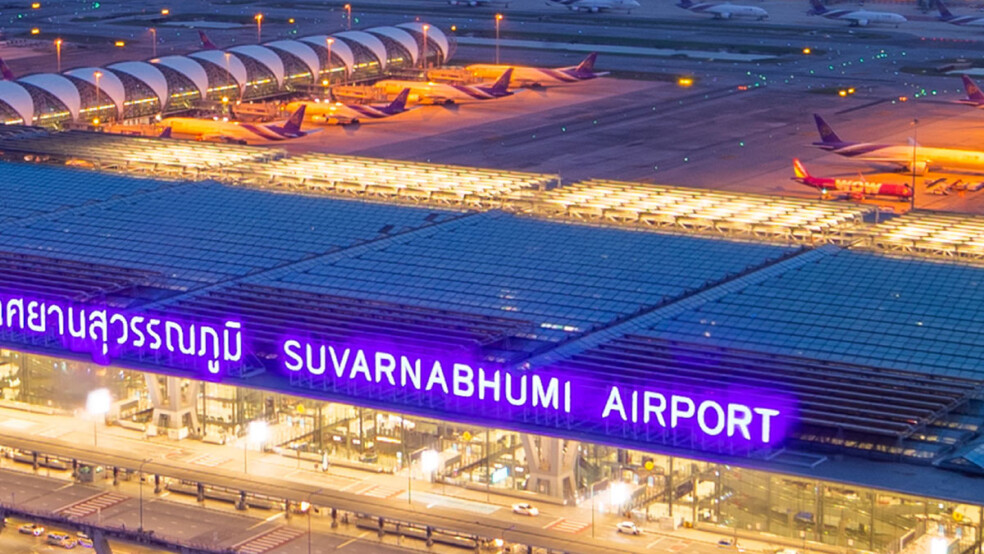
BANGKOK — Thailand’s National Security Council has ordered heightened counter-drone measures at Suvarnabhumi Airport following reports of drone sightings near the airport late Saturday, officials said.

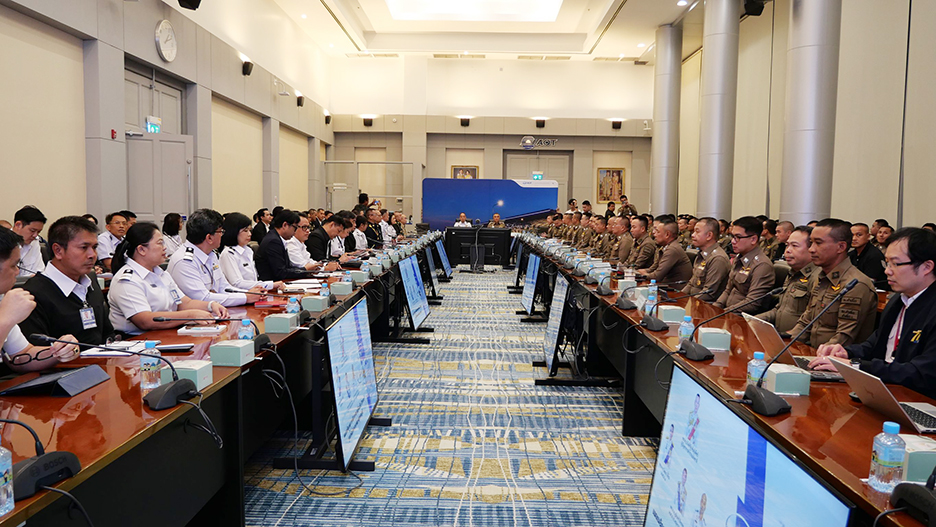
The council directed Airports of Thailand to fast-track procurement of advanced anti-drone technology after residents in Nong Prue subdistrict, in Samut Prakan province, reported seeing drone-like objects near the airport perimeter on December 20. An emergency meeting on Monday also ordered security forces to maintain a constant presence at the airport during the transition period.

Authorities warned that flying drones in restricted airport zones carries the country’s harshest penalties, as airports are designated high-security areas.

Suvarnabhumi Airport Director Kittipong Kittikachorn said the drones did not enter controlled airspace and remained near the outer perimeter fence. In response, the airport and security agencies installed signal jammers to prevent any intrusion, coordinating with Aeronautical Radio of Thailand to ensure flight safety.

drone security1
Officials attend an emergency security meeting after reports of drone sightings near Suvarnabhumi Airport in Samut Prakan province, on Dec.22, 2025.

“Suvarnabhumi Airport and security agencies assure passengers and tourists that the airport meets international safety standards, and personnel are ready to manage incidents at all times,” Kittipong said.

He urged the public to distinguish between drones and aircraft, noting that drones typically display green and red lights and emit audible sounds at low altitudes, while aircraft have strobe lights and continuous engine noise.

Police Region 1 Commander Lt. Gen. Wattana Yeesin said officers have been deployed around the clock along the airport perimeter and at all entry points to inspect vehicles and suspicious activity. He dismissed social media claims of dozens of drones as inaccurate, saying investigators identified only two to three drones flying intermittently for 10 to 20 minutes east of the airport and outside restricted airspace.

drone security2
Suvarnabhumi Airport Director Kittipong Kittikachorn, left, and Police Region 1 Commander Lt. Gen. Wattana Yeesin attend an emergency meeting following reports of drone activity near the airport in Samut Prakan province, on Dec.22, 2025.

Security sources said the drones were operated by foreign tourists photographing aircraft and posed no threat. Authorities questioned the individuals on Monday.

The Royal Thai Air Force is leading prevention operations, deploying counter-drone equipment including Redsky-II systems, drone-disabling guns and shotguns. The Royal Thai Police and local police units have also integrated their anti-drone systems into the operation.

The reports heightened public anxiety as Thailand’s military has been engaged in clashes with Cambodia along the border, although the fighting is far from Suvarnabhumi Airport.

___

The post Thailand Steps Up Anti-Drone Security at Suvarnabhumi Airport appeared first on Khaosod English.


Read the whole story
freeAgent
1 hour ago
reply
Installing signal jammers around an airport seems a bit counterproductive. I wonder how that works.
Los Angeles, CA
Share this story
Delete

The LinkedIn job scam is global. The hook is local

1 Share
LinkedIn job scams have become a borderless epidemic, preying on the hopes of desperate job seekers and costing victims across the globe anywhere from a few hundred dollars to $25,000....

Read the whole story
freeAgent
1 hour ago
reply
Los Angeles, CA
Share this story
Delete

Internet-Connected Consoles Are Retro Now, And That Means Problems

1 Share

A long time ago, there was a big difference between PC and console gaming. The former often came with headaches. You’d fight with drivers, struggle with crashes, and grow ever more frustrated dealing with CD piracy checks and endless patches and updates. Meanwhile, consoles offered the exact opposite experience—just slam in a cartridge, and go!

That beautiful feature fell away when consoles joined the Internet. Suddenly there were servers to sign in to and updates to download and a whole bunch of hoops to jump through before you even got to play a game. Now, those early generations of Internet-connected consoles are becoming retro, and that’s introduced a whole new set of problems now the infrastructure is dying or dead. Boot up and play? You must be joking!

Turn 360 Degrees And Log Out

The Xbox 360 was a console that had online gaming built in to its very fabric from the outset. Credit: author

Microsoft first launched the Xbox 360 in 2005. It was the American company’s second major console, following on from the success of the Xbox that fought so valiantly against the Sony PlayStation 2 and the Nintendo GameCube. Where those sixth generation consoles had been the first to really lean in to online gaming, it was the seventh generation that would make it a core part of the console experience.

The Xbox 360 liked to sign you straight into Xbox Live the moment you switched on the console. All your friends would get hear a little bling as they were notified that you’d come online, and you’d get the same in turn. You could then boot into the game of your choice, where you’d likely sign into a specific third-party server to check for updates and handle any online matchmaking.

The Xbox 360 didn’t need to be always online, it just really wanted you to be. This was simply how gaming was to be now. Networked and now highly visible, in a semi-public way. Where Microsoft blazed a trail in the online user experience for the console market, Sony soon followed with its own feature-equivalent offering, albeit one that was never quite as elegant as that which it aimed to duplicate.

Boot up an Xbox 360 today, and you might find it rather difficult to log into your Xbox Live account—even if you do remember your password! Credit: author

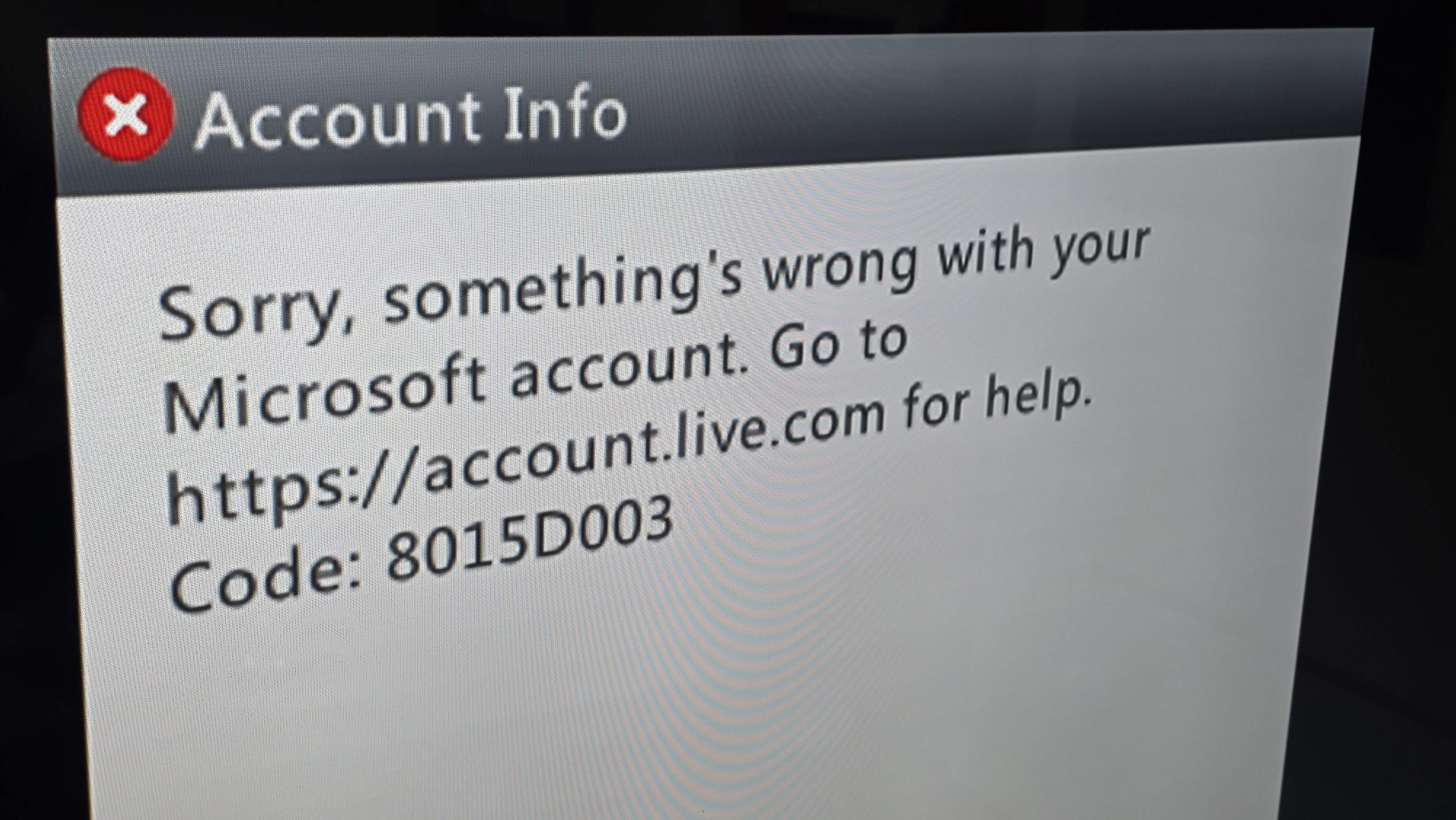
Fire up an Xbox 360 today, and you’ll see that console acting like it’s still 2008 or something. It will pleasantly reach out to Microsoft servers, and it will even get a reply—and it will then prompt you to log in with your Xbox Live or Microsoft account. You’ve probably got one—many of us do—but here lies a weird problem. When you try to log in to an Xbox 360 with your current Microsoft account, you will almost certainly fail! You might get an error like 8015D086 or 8015D000, or have it fail more quietly with a simple timeout.

It all comes down to authentication. See, the Internet was a much happier, friendly place when the Xbox 360 first hit the shelves. Back then, a simple password of 8 characters or more with maybe a numeral or two was considered pretty darn good for login purposes. Not like today, where you need to up the complexity significantly and throw in two-factor authentication to boot. And therein lies the problem, because the Xbox 360 was never expecting two-factor authentication to be a thing.

Today, your Microsoft account won’t be authorized for login without it, and thus your Xbox 360 won’t be able to log in to Xbox Live. In fairness, you wouldn’t miss much. All the online stores and marketplaces and games servers were killed ages ago, after all. However, the 360 really doesn’t like not being online. It will ask you all the time if you want to sign in! Plus, if you wanted to get your machine the very last dashboard updates or anything like that… you need to be able to sign into Xbox Live.

Thankfully, there is a workaround. Community members have found various solutions, most easily found in posts shared on Reddit. Sometimes you can get by simply by disabling two-factor authentication and changing to a low-complexity password due to the 360’s character limit in the entry field. If that doesn’t work, though, you have to go to the effort to set up a special “App Password” in your Microsoft account that will let the Xbox 360 authenticate in a simpler, more direct fashion.

Plenty of modern video games are built with online features that rely on the publisher-hosted servers. When those shut down, parts of the game die. Credit: author

Pull all this off, and you’ll hear that famous chime as your home console reaches the promised land of Xbox Live. None of your friends will be online, and nobody’s really checking your Gamerscore anymore, but now you can finally play some games!

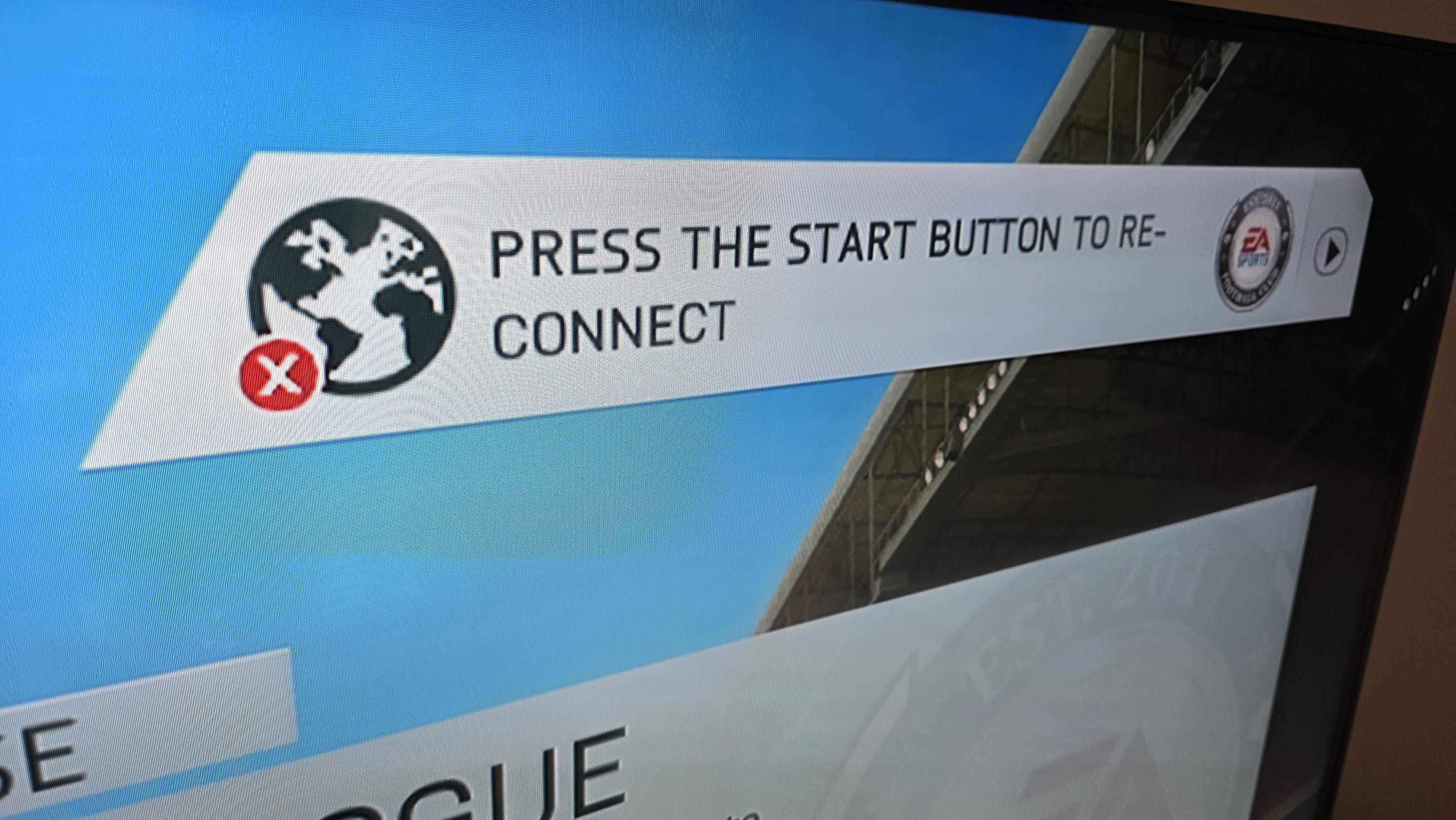
Only, for a great many titles on the Xbox 360, there were dedicated online servers, too. Pop in FIFA 16, and the game will stall for a moment before it reports that it’s failed to connect to EA’s servers. Back in the day, those servers provided a continual stream of minor updates to the game, player rosters, and stats, making it feel like almost a living thing. Today, there’s nothing out there but a request that always times out.

This would be no issue if it happened just once, but alas… you’ll have to tangle with the game doing this time and again, every time you boot it up. It wants that server, it’s so sure it’s out there… but it never phones back from the aether.

Many games still retain most of their playability without an Internet connection, and most consoles will still boot up without one. Nevertheless, the more these machines are built to rely on an ever-present link to the cloud, the less of them will be accessible many years into the future.

Not Unique

It’s much harder to join the fun than it used to be. Credit: author

This problem is not unique to the Xbox 360. It’s common to run into similar problems with the PlayStation 3, with Sony providing a workaround to get the old consoles online. For both consoles, you’re still relying on the servers remaining online. It’s fair to assume the little remaining support for these machines will be switched off too, in time. Meanwhile, if you’re playing Pokemon Diamond on the Nintendo DS, you’ve probably noticed the servers are completely gone. In that case, you’re left to rely on community efforts to emulate the original Nintendo WFC servers, which run with varying levels of success. For less popular games, though there’s simply nothing left—whatever online service there was is gone, and it’s not coming back.

These problems will come for each following console generation in turn. Any game and any console that relies on manufacturer-run infrastructure will eventually shut down when it becomes no longer profitable or worthwhile to run. It’s a great pity, to be sure. The best we can do is to pressure manufacturers to make sure that their hardware and games retain as much capability as possible when a connection isn’t available. That will at least leave us with something to play when the servers do finally go dark.


Read the whole story
freeAgent
1 hour ago
reply
Los Angeles, CA
Share this story
Delete
Next Page of Stories